Beautiful, but not simple
Regaleira did not feel like a normal palace visit. It felt layered from the start: part garden, part stage set, part symbolic maze, with the famous well only one piece of the larger estate.
Sintra / Day 2 Anchor
Quinta da Regaleira is the Day 2 morning anchor: a symbolic estate of wells, tunnels, grottoes, chapel spaces, palace rooms, and garden architecture that feels less like one attraction than a sequence of thresholds.
Regaleira begins as a Sintra logistics problem and quickly becomes something more memorable: shadowed wells, wet stone, chapel detail, palace rooms, and garden paths that keep shifting the scale of the visit.
The practical part shaped the morning. There was no useful parking at the site, the approach felt like a one-way loop with no easy reset, and the better move is to solve access before you are at the gate.
Once inside, the estate rewards attention. The Initiation Well is the obvious visual anchor, but the stronger memory is how the whole place moves from daylight to descent, water to chapel, interior ornament to views back across Sintra.
The memorable part is how quickly the estate moves from elegant Sintra surface into shadow, water, stone, and symbolism.
Regaleira did not feel like a normal palace visit. It felt layered from the start: part garden, part stage set, part symbolic maze, with the famous well only one piece of the larger estate.
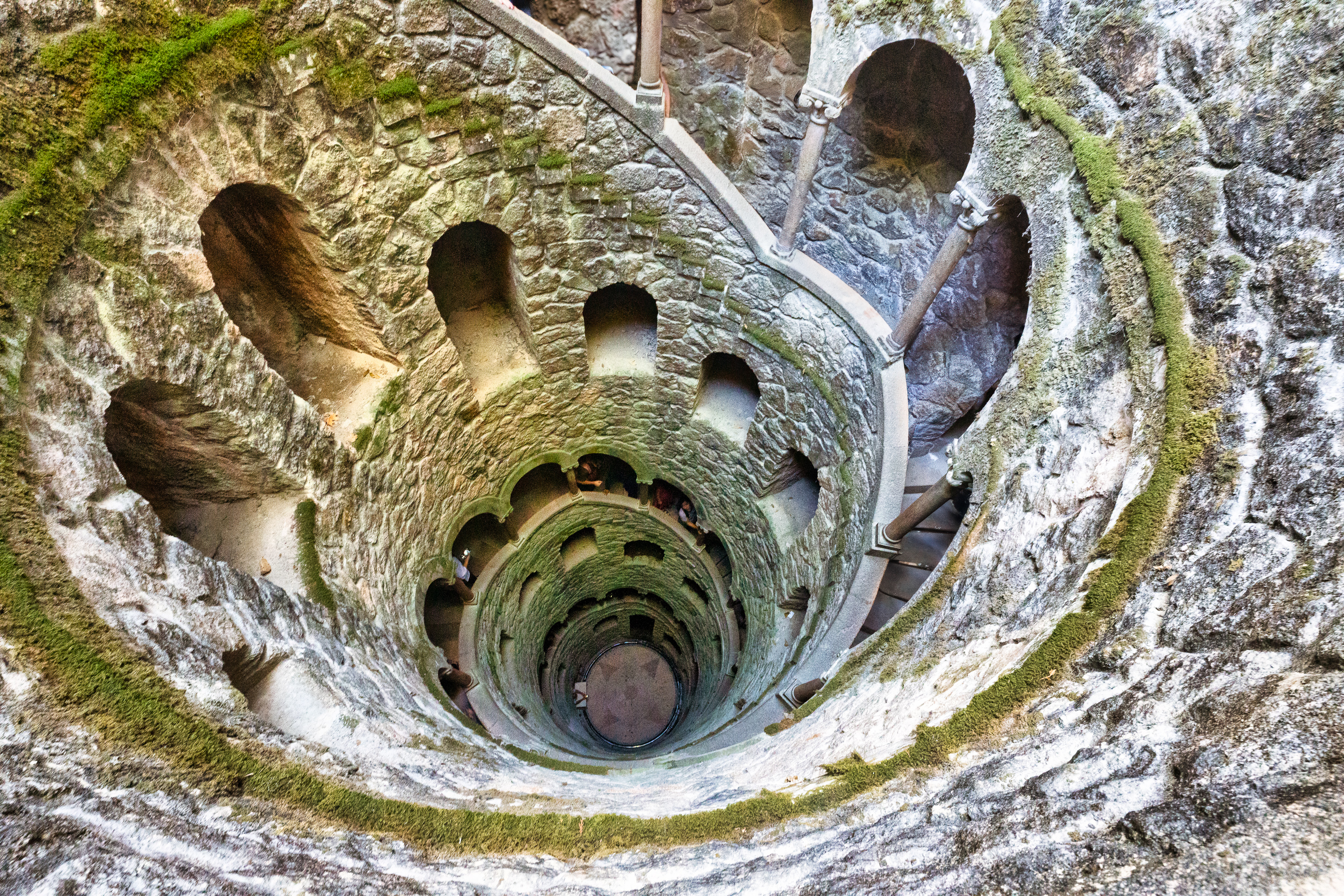
The Initiation Well is the gravitational point of the visit. The 27-metre descent, spiral stair, and low light give it a physical drama that photographs can suggest but not fully carry.
After the well, the estate keeps shifting through underground walkways, grottoes, water, towers, chapel spaces, and palace rooms. The pleasure is in letting those changes accumulate rather than reducing the visit to one landmark.
The estate felt intentionally staged without becoming fake: every turn seemed to manage light, concealment, reveal, and viewpoint. That is the part that stayed with me.
Regaleira does not work like a drive-up attraction with parking at the site. Even in October, parking nearby was difficult, and the approach felt like a tight one-way loop: once we were in it, there was no easy place to reset, turn around, or casually circle for a spot. The clearer plan is to park peripherally and walk in, or use transit, taxi, or rideshare. If using Bolt, request it before leaving the grounds so the ride is already moving while you walk out.
Regaleira builds its effect through contrast: approach roads, subterranean stone, green water, chapel iconography, carved interiors, small garden details, and the hills beyond.
Before Regaleira becomes wells and grottoes, it is still Sintra: narrow approaches, tiled walls, curves, and the sense that the estate is tucked into a town already full of pressure and beauty. Parking was genuinely hard even in October. Regaleira is not a normal drive-up stop: there is no useful parking at the site, and the approach felt like a one-way circle with no easy reset once we were committed. Use peripheral parking and walk in, or use transit, taxi, or rideshare. If you are using Bolt, order it before leaving the estate so the ride is already moving while you walk out. The arrival images belong here because they show the threshold before the symbolism starts.
The Initiation Well is Regaleira at its most iconic: a 27-metre descent wrapped by a monumental spiral stair, dark enough to feel subterranean and composed enough to feel ceremonial. It is a famous image, but the stronger memory is physical: looking down into the shaft, moving with the stair, and feeling the estate turn inward.
After the well, the estate keeps the same underworld feeling moving through passages, grottoes, wet stone openings, and green water. This is where Regaleira stops being one famous shaft and starts feeling like a whole designed route.
Back in the light, the garden keeps offering small designed scenes: towers, fountains, grotto-like openings, stonework, and carefully staged views. The names matter, but the better visitor memory is how much intention is packed into the in-between spaces.
The chapel is small, but it deepens the mood of the estate. Its Manueline language, religious imagery, and nearby tunnel connection make Regaleira feel devotional and theatrical at the same time, as if the garden symbolism has stepped indoors.
Inside the house, the mood changes again. The rooms are less about a single grand reveal than accumulated texture: carved ceilings, plasterwork, fireplaces, chandeliers, patterned surfaces, and decorative craft built into Carvalho Monteiro's neo-Manueline summer residence.
Between the palace rooms and the outward views, Regaleira keeps giving you smaller designed moments: an ornamental bench, a grotto-like opening, a stone window, a fountain, a framed patch of green. They are part of the estate's larger habit of turning movement into composition.
The outward views give the visit its final bit of orientation. The Castle of the Moors appears above the trees from the estate grounds, making Sintra feel layered rather than divided into standalone attractions.
The full slideshow carries the estate's rhythm better than a single hero can: dark well, wet stone, green water, carved chapel, ornamental rooms, garden details, and outward views.